
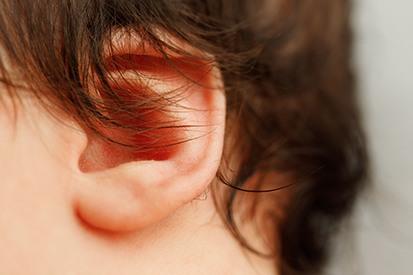
Dr Chin’s View in Understanding Pediatric Ear Infections (Otitis Media)
Discover the signs and treatment for pediatric ear infections (Otitis Media) that may be causing your baby’s constant crying. Read more on our blog!
Otitis media, or middle ear infection, is one of the most common reasons young children visit the doctor—especially between 6 months of age and 3 years of age. Characterized by inflammation of the middle ear, this condition causes significant ear pain, which often goes unnoticed until a child begins constant crying, tugging at their ear canal, or develops a high fever.
Why Babies Are at Higher Risk
Children have shorter and more horizontal eustachian tubes, making it easier for bacteria from the upper respiratory tract or back of the throat to reach the parts of the middle ear. When the eustachian tube becomes blocked due to an upper respiratory tract infection, fluid buildup occurs, trapping bacteria and leading to acute otitis media.
Other risk factors include:
- Exposure to tobacco smoke or secondhand smoke
- Bottle-feeding instead of breast milk
- Frequent upper respiratory infections
- Attending daycare with other sick children
Recognizing Symptoms of an Ear Infection
Ear infections often present differently in younger children than in older ones. Knowing what to look for can help you seek timely care and prevent long-term complications. Here’s a quick guide to common symptoms and what they might indicate:
| Symptom | What It May Indicate |
|---|---|
| Persistent crying and irritability | Discomfort from pressure in the middle ear or fluid buildup |
| Complains that the ear hurts | Classic sign of acute otitis media or inflammation of the middle ear |
| Trouble sleeping or feeding | Worsening of ear pain when lying down or sucking/swallowing |
| Fluid drainage from ear canal | Possible ruptured ear drum or middle ear infection with effusion |
| Hearing loss in older children | Presence of middle ear fluid or delayed language development |
To confirm the diagnosis of otitis media, your provider may use a pneumatic otoscope to inspect the tympanic membrane for redness, swelling, or signs of fluid in the middle ear.
Complications of Untreated Otitis Media
If left untreated, middle ear effusion can become chronic, leading to chronic otitis media or chronic suppurative otitis media, which may damage the ear drum or affect the inner ear. Repeated infections, known as recurrent AOM, may require further evaluation for tympanostomy tube placement.
The American Academy of Pediatrics and American Academy of Otolaryngology recommend close monitoring and tailored care based on the child’s age and severity of symptoms.
Treatment and Prevention Options
The treatment of otitis media typically involves child acetaminophen for pain relief, and in some cases, a day of amoxicillin or other antibiotics may be prescribed. For chronic cases, surgery or ENT referral may be necessary.
To reduce the risk of ear infections:
- Encourage breastfeeding when possible
- Avoid cigarette smoke exposure
- Keep your child’s vaccinations up to date
- Teach children to wash hands frequently
- Avoid bottle-feeding while lying flat
According to the Int J Pediatr Otorhinolaryngol, preventing upper respiratory infections remains one of the best ways to reduce the occurrence of infection of the middle ear in the United States and globally.
- About the Author
- Latest Posts

Dr Ronald Chin is an Australian trained Otolaryngologist Head and Neck Surgeon.
After graduating as a Fellow of the Royal Australasian College of Surgeons, Dr Chin undertook further specialised training in Head and Neck Cancer at the Royal College of Surgeons in Ireland.
He has published many research papers and is an active teacher and scholar.
As part of his subspecialty training, Dr Chin has training in Laser, Da Vinci Robotic, Flex Robotic and complex surgical techniques.
In addition to specialised Head and Neck Cancer, Dr Chin also enjoys general adult and paediatric ENT Surgery and practices sinus, snoring/sleep and general paediatric ENT Surgical procedures.
Dr Ronald Chin works as a general Otolaryngologist, offering a wide range of surgical and non-surgical treatments including ear surgery, nose surgery and throat surgery. He provides treatment for chronic conditions such as tonsillitis, sinus problems and problems with hearing.
He is also involved in the diagnosis and treatment of many conditions such as facial paralysis, head and neck cancer and sleep apnea. As well as performing surgery on children, he also provides specialist care for adults, including the treatment of throat disorders, voice loss and ear problems.
Dr Chin has also served as a Conjoint Associate Professor at the University of Sydney, a Conjoint Associate Professor at Western Sydney University and an Adjunct Associate Professor at the University of Technology Sydney.