Dr. Ronald Chin’s Explanation Of The Anatomy Of The Ear
Dr. Ronald Chin’s Explanation Of The Anatomy Of The Ear
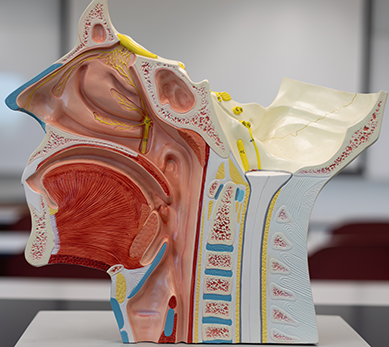
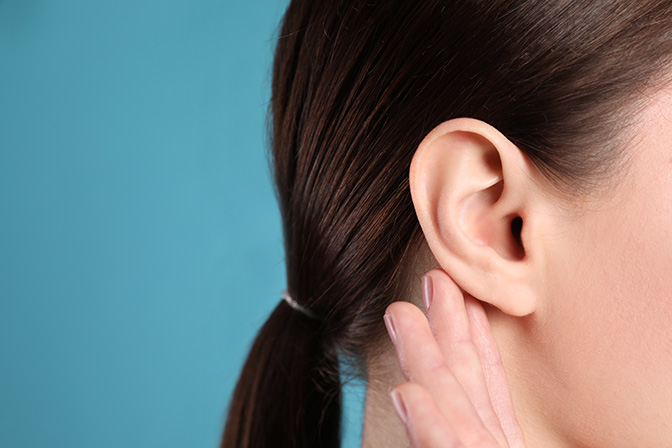
The ear can be divided into three parts: the inner ear, the middle ear, and the external ear. The outer ear comprises the Pinna and the External Auditory Canal (EAC).
The Pinna comprises elastic cartilage surrounded by skin on either side. It channels sound waves into the external auditory canal, where the sound waves transmit to the tympanic membrane. The external auditory canal comprises a lateral cartilaginous portion and a medial bony portion.
The middle ear is made up of 2 parts: the Tympanic Membrane. It’s an oval-shaped membrane composed of the outer squamous, middle fibrous, and mucosa. And Middle ear cavity. In the centre of the tympanic membrane is an air-filled space containing ossicles, which are the malleus, incus, and stapes. The Eustachian tube connects it with the nasopharynx, and the adirtus connects it with the mastoid air cells.
Lastly, the inner ear comprises the vestibular system with semicircular canals and the cochlea.
Glue ear, after draining the ear drum
Glue ear, intact ear drum
- About the Author
- Latest Posts

Dr Ronald Chin is an Australian trained Otolaryngologist Head and Neck Surgeon.
After graduating as a Fellow of the Royal Australasian College of Surgeons, Dr Chin undertook further specialised training in Head and Neck Cancer at the Royal College of Surgeons in Ireland.
He has published many research papers and is an active teacher and scholar.
As part of his subspecialty training, Dr Chin has training in Laser, Da Vinci Robotic, Flex Robotic and complex surgical techniques.
In addition to specialised Head and Neck Cancer, Dr Chin also enjoys general adult and paediatric ENT Surgery and practices sinus, snoring/sleep and general paediatric ENT Surgical procedures.
Dr Ronald Chin works as a general Otolaryngologist, offering a wide range of surgical and non-surgical treatments including ear surgery, nose surgery and throat surgery. He provides treatment for chronic conditions such as tonsillitis, sinus problems and problems with hearing.
He is also involved in the diagnosis and treatment of many conditions such as facial paralysis, head and neck cancer and sleep apnea. As well as performing surgery on children, he also provides specialist care for adults, including the treatment of throat disorders, voice loss and ear problems.
Dr Chin has also served as a Conjoint Associate Professor at the University of Sydney, a Conjoint Associate Professor at Western Sydney University and an Adjunct Associate Professor at the University of Technology Sydney.